
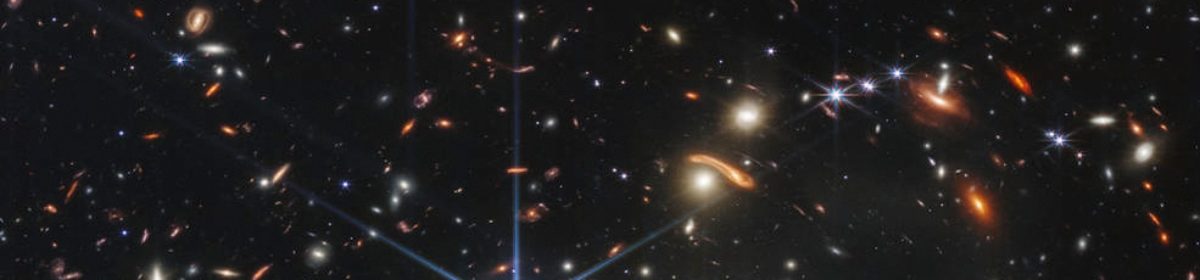
Seventeen members attended Tuesday evening’s meeting at St. Michael’s Catholic Secondary School. Patrick Hayes chaired the meeting and reported that, as of September, the club has a balance of $1,448 in its account.
Patrick is working to partner with the Stratford-Perth Museum again for a Star Party Night in January 2027. Details will follow at the November and December meetings.
TELESCOPE EQUIPMENT STORAGE
Jim and Minne Koteles have kindly agreed to store the club’s 8-inch Dobsonian telescope and stand on their property for the winter. The yellow eyepiece case and eyepieces are stored there too. The Koteles have hosted SOG viewing parties from their expansive backyard close to Wildwood Conservation Area and hope to do so again.
SHOW-AND-TELL
Patrick brought astronomy binoculars mounted on a tripod. A member asked why one might use such a set-up for night sky viewing. The main advantage is the wide field of view; the entire Pleiades can be seen at once. The only drawback is the difficulty of keeping the binoculars stable. Patrick admitted that his binoculars were old. A club member pointed out that current state-of-the-art binoculars have excellent self-stabilizing features, but you pay for them. (Click here for more information on self-stabilizing binoculars.)
Ken Roberts also brought his Astroscan, a small, wide-field reflecting telescope made by Edmund Scientific and first sold in the late 1970s. Because of its size and portability, it was the “original grab-and-go” telescope. (Click here to see more on the Astroscan.)
The Astroscan is shaped like a short, stubby tube with a round base, and it looks a little like a red ball sitting on a stand. It does not use a tripod: you set it on a table or on the ground and point it by hand. It is a 4.25-inch (about 108 mm) f/4 Newtonian reflector with a focal length of 17 inches, which provides low magnification and a wide field of view.
Ken is having a problem keeping the 1.25-inch eyepiece stable when the telescope is moved about. One club member offered him advice on how to steady it.
COOL COSMOLOGY NEWS
Dr. Michael Burns presented Cool Cosmology News for October to the members. The beautiful Hunter’s Full Moon and the Celestial Triangle will be visible on October 26.
Click here to view the full Cool Cosmology News, October 2026. It includes the Moon phases for each night and a “What’s Up” guide to the night sky. The links on each day of the October calendar are active and lead to more information.
See the last slide in Cool Cosmology News. Michael Burns presented a talk entitled “Boundaries – 2nd Try” to address the question: Does the universe have boundaries?
The observable universe is about 93 billion light-years across. That’s larger than you might expect given the universe is only about 13.8 billion years old, since space itself has been expanding the whole time. Light from the most distant things we can see has been travelling for 13.8 billion years, but those objects have since been carried much farther away, to roughly 46 billion light-years from us in every direction.
That figure describes the observable universe, not the whole thing. It’s a horizon set by how far light has had time to reach us, not an edge. An observer in a distant galaxy would have their own observable bubble, centred on them and overlapping with ours.
Does the universe have a boundary? As far as we can tell, no, says Dr. Burns. There’s no wall or edge out there, and the Big Bang wasn’t an explosion at a point in space; it was the expansion of space everywhere at once. Two main possibilities remain open:
The universe is infinite: space goes on forever, with no edge.
The universe is finite but unbounded: space curves back on itself, a bit like the surface of a sphere. The surface of a ball has a finite area but no edge, and you can travel forever without reaching a boundary. A 3D version of this would mean that travelling far enough in a straight line could eventually bring you back to where you started.
Measurements of the cosmic microwave background (from satellites like Planck) show space is very close to “flat,” meaning no detectable curvature. That’s consistent with an infinite universe, but it doesn’t prove it, because a finite universe that is simply much bigger than our observable patch would also look flat to us.
Dr. Burns’s presentations have a style all their own. His colourful PowerPoint slides feature a small Albert Einstein-like character who poses questions throughout the talk, a refreshing approach that keeps the audience engaged.
Time did not allow him to finish his talk on the boundaries of the universe, so he will continue it at a future meeting.
Tom Kimber – News